Introduction
Air fryers have fundamentally changed how many households approach cooking. What started as a novelty kitchen gadget has evolved into a legitimate cooking method that offers genuine advantages for certain types of food preparation. Among the various options available, larger capacity models have gained particular attention from people looking to cook for families or those who want flexibility in meal planning.
The Cosori TurboBlaze represents a category of air fryers designed around versatility rather than simplicity. With its 6-quart capacity and nine distinct cooking modes, this appliance attempts to address a common frustration: the gap between what traditional countertop cooking methods can do and what newer air frying technology promises. Whether you’re interested in understanding how modern air fryer technology works, exploring how a multi-function appliance might fit into your kitchen routine, or simply learning what capabilities this particular model offers, this guide covers the practical aspects you should know.
What Makes Air Frying Different from Traditional Cooking Methods?
Before diving into specific features, it’s worth understanding how air frying fundamentally differs from conventional oven cooking, deep frying, or other preparation techniques.
Air frying works by circulating extremely hot air at high velocity around food. This rapid air circulation creates a cooking environment quite different from a traditional convection oven, which also uses moving air but at slower speeds and typically lower temperatures. The efficiency of this process comes from the concentrated heat and airflow in a smaller chamber, which means food cooks faster and surfaces can brown more effectively.
The practical result is that certain foods develop crispy exteriors while maintaining moisture inside—a quality that has made air fryers particularly popular for items traditionally associated with deep frying. However, it’s important to recognize that air frying produces a different texture than immersion in hot oil. The difference isn’t necessarily better or worse, just different. This distinction matters when setting realistic expectations about what the cooking method can achieve.
Key Features of the Cosori TurboBlaze
Capacity and Design Considerations
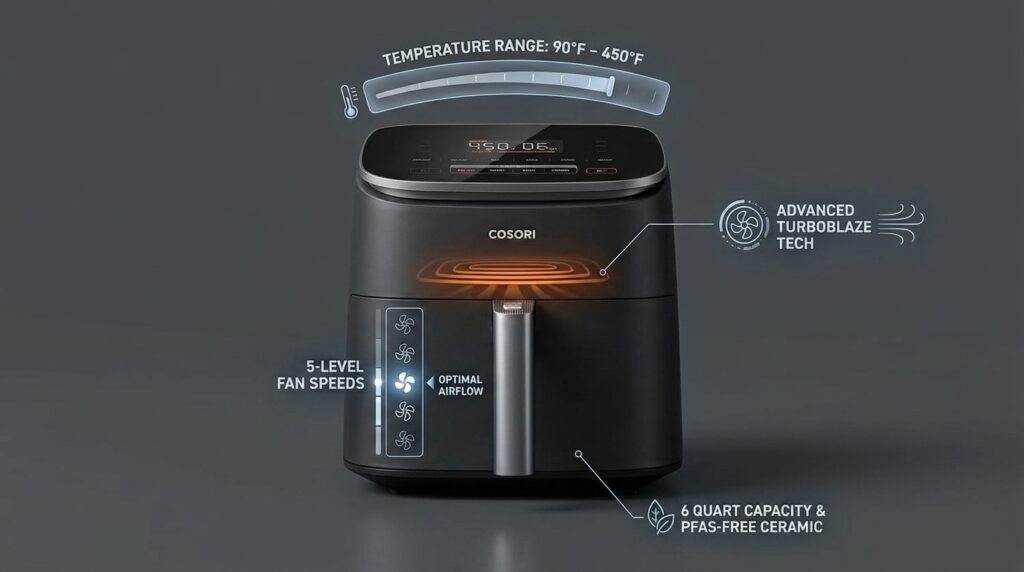
The 6-quart capacity of this model sits in the larger segment of the air fryer market. For context, this translates to significantly more cooking space than smaller 2-3 quart models, but it’s not quite at the commercial or extra-large scale. This middle ground proves practical for many households because it handles cooking for a family-sized meal without occupying the counter space that very large models demand.
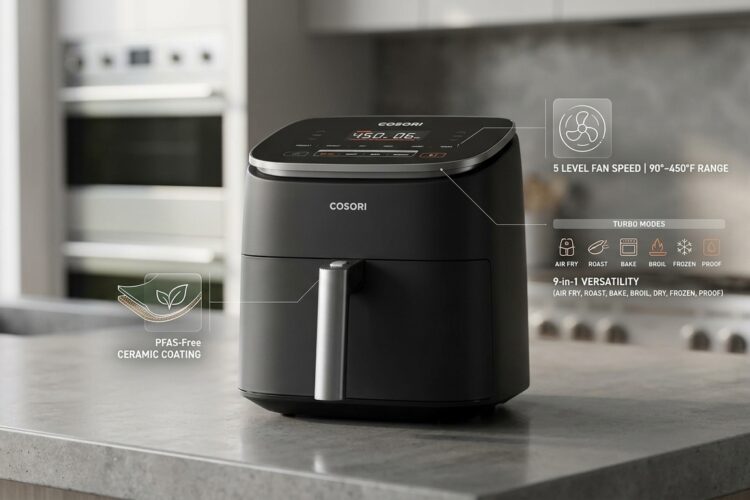
The ceramic coating mentioned in the product specifications deserves attention. Ceramic non-stick surfaces have become increasingly common in cookware and small appliances as manufacturers have moved toward addressing concerns about PFAS (per- and polyfluoroalkyl substances). These substances, which include the compound traditionally known as Teflon, have been used for decades in non-stick coatings. The shift toward ceramic alternatives reflects changing regulatory scrutiny and consumer preference for alternatives in some households. Ceramic coatings generally resist scratching and tend to be more durable than some traditional non-stick surfaces, though they may require slightly different care during cleaning.
Temperature Range and Precision
The temperature spectrum of 90°F to 450°F provides considerable range. The lower end accommodates food dehydration and gentle warming, while the upper end handles high-heat browning and crisping. This breadth is essential for supporting the nine different cooking modes the device offers.
Most air frying happens in the 350°F to 400°F range, so the ability to go to 450°F provides margin for aggressive browning. Conversely, the ability to operate at 90°F—barely warmer than room temperature—enables functions like proofing dough, which requires gentle, consistent heat without actually cooking the ingredients.
Five-Level Fan Speed Control
The inclusion of adjustable fan speeds addresses a reality many people discover through experience: not all foods benefit from maximum airflow. Delicate items, foods prone to drying out, or dishes with components you want to cook at different rates may require more moderate air circulation. Having five distinct settings provides flexibility without overwhelming users with endless micro-adjustments.
This feature particularly matters when experimenting with recipes not originally designed for air fryers. A traditional oven recipe might need adaptation when converted to air frying, and variable fan speeds offer one adjustment lever that helps bridge that gap.
The Nine Cooking Modes
The device advertises nine distinct modes: air fry, roast, bake, broil, dry, frozen, and proof. That’s seven listed, with the “9 in 1” designation suggesting additional combinations or variations beyond these primary modes.
Air fry represents the appliance’s primary function—rapid circulation of very hot air to create crispy exteriors.
Roast typically indicates a mode using moderate heat with consistent air circulation suitable for browning and cooking vegetables, meats, or other items that benefit from even heat distribution but don’t require the extreme high temperature of dedicated air frying.
Bake generally functions similarly to a traditional oven, with gentler heat circulation appropriate for breads, pastries, and baked goods. This mode recognizes that not everything benefits from high-velocity air; some applications need steadier, more traditional convection.
Broil uses high heat, typically from above (though in an air fryer context, this varies by design), creating a top-browning effect useful for finishing dishes or cooking items quickly from above.
Dry operates at lower temperatures over extended periods, enabling food dehydration. This function transforms an air fryer into a supplementary dehydrator for items like vegetable chips, fruit leather, or beef jerky.
Frozen indicates programming specifically designed for cooking items directly from frozen without thawing. This mode typically adjusts temperature and time parameters to accommodate the heat transfer requirements of frozen foods.
Proof uses the low-temperature range to create a warm environment suitable for yeast dough proofing—a function that appeals to people who bake bread at home but may not have dedicated proofing equipment.
The fact that the marketing claims “9 in 1” rather than strictly seven suggests either that certain modes have multiple settings or presets, or that the counting includes variations and combinations that aren’t marketed as separate modes.
Practical Applications and Cooking Possibilities
Understanding what an air fryer can do in real-world scenarios helps clarify whether the appliance makes sense for your household.
Everyday Cooking Applications
Air fryers excel at certain categories of food that often appear in regular meal planning. Vegetables benefit significantly from air frying’s browning capabilities. Brussels sprouts, broccoli, zucchini, and root vegetables develop caramelized exteriors while remaining tender inside—often more effectively than in a traditional oven because of the concentrated heat environment.
Proteins offer another clear use case. Chicken thighs, drumsticks, and wings develop crispy skin; salmon and other fish cook evenly; and lean proteins can be cooked while controlling drying-out. The key difference from deep frying is that you achieve browning with minimal to no added oil, depending on the food being prepared.
Frozen prepared foods represent perhaps the most straightforward application. Frozen appetizers, the growing category of air fryer-specific frozen products, and even frozen fries or hash browns cook more consistently in an air fryer than in a traditional oven, generally producing crisper results with less oil.
Leftovers reheating deserves mention because many people find that air fryers revive previously cooked items better than microwaves or traditional ovens. Pizza regains crispness, fried items recover their texture, and casseroles can be warmed without becoming rubbery.
Expanded Cooking Applications
Beyond everyday cooking, the versatility framework opens other possibilities. Baking inside an air fryer works differently than in a standard oven due to the different heat dynamics, but it is achievable. Small cakes, brownies, cookies, and biscuits have all been successfully prepared in air fryers, though recipes often require temperature and time adjustment from conventional baking instructions.
Dehydration, supported by the dry mode and low-temperature capabilities, transforms an air fryer into equipment for food preservation. People preserve herbs, make vegetable chips, prepare jerky, or create dried fruit—applications that typically require a dedicated dehydrator.
Proofing dough represents a niche but valuable function for home bakers. Maintaining consistent warmth for yeast activation and rise without actively cooking the dough has traditionally required special equipment or creative workarounds. Having this capability built in appeals to people who bake bread regularly.
Rotisserie-style cooking, where items might be rotated or turned halfway through, is handled by the operator rather than automatic features in most air fryer designs, but the roasting mode supports this type of preparation.
Cooking for Different Household Sizes
The 6-quart capacity meaningfully expands what’s possible in a single batch compared to smaller models. For a family of four, this often means cooking proteins, vegetables, and sides simultaneously or preparing substantial portions with room to spare. For smaller households or individuals, it means the ability to batch-cook and store portions for multiple meals.
The variable fan speeds particularly help when you’re attempting to cook foods with different texture goals in the same batch—perhaps crisping some items while others heat through more gently.
Who May Find This Appliance Suitable
Identifying who benefits most from a multi-function air fryer involves considering both cooking habits and household characteristics.
Families with Varied Dietary Preferences
Households with different members preferring different cooking styles—some wanting crispy results, others preferring gentler preparation, and perhaps someone interested in baked goods—benefit from having multiple modes available. Rather than needing separate equipment for air frying, roasting, and baking, one appliance can handle these roles.
People Interested in Healthier Preparation Methods
Air frying using minimal added oil appeals to people conscious about fat and calorie content in their diets. While the health benefits of air frying versus other cooking methods are sometimes overstated in marketing materials, the ability to brown and crisp foods with little to no oil does represent a legitimate distinction from deep frying.
Home Bakers and Cooks Who Experiment
The combination of modes attracts people who like exploring new cooking techniques. Those who make bread appreciate the proofing mode; people interested in food preservation might explore the dehydration capabilities; experimenters enjoy adapting recipes to work in the air fryer environment.
Households with Limited Kitchen Space
Larger countertop appliances that combine multiple cooking functions appeal to people who lack space for numerous single-purpose devices. A 6-quart air fryer doing the work of an air fryer, roaster, dehydrator, and secondary oven reduces overall equipment footprint.
Busy Households Seeking Faster Meal Preparation
Air fryers generally reduce cooking times compared to traditional ovens, particularly for items designed for quick, high-heat preparation. Families with packed schedules find value in faster food preparation.
Important Considerations Before Adding One to Your Kitchen
Counter Space and Kitchen Layout
A 6-quart air fryer, while not the largest available, still occupies meaningful counter real estate. Before purchasing, honestly assess available space and how the appliance would fit into your kitchen workflow. Some people prefer storing larger appliances and pulling them out as needed; others keep them accessible for daily use.
Learning Curve and Recipe Adaptation
While air fryers have become common enough that extensive recipe resources exist, there’s still a learning process involved. Traditional oven recipes don’t always translate directly, requiring temperature and time adjustments. Some foods work well in air fryers; others remain better suited to traditional methods. Building competence with the appliance takes some experimentation.
Food Types and Preferences
Air fryers work exceptionally well for certain applications and less ideally for others. Dishes relying on wet batters, those requiring precise internal doneness without exterior browning, or foods that benefit from long, slow cooking often work better in traditional cooking methods. Similarly, if your household’s cuisine is primarily built around items that don’t benefit from air frying, the appliance’s versatility becomes less relevant.
Maintenance and Care
Ceramic coatings, while durable, still require proper care. Non-abrasive cleaning materials and careful handling protect the surface. The basket or tray needs regular cleaning, and like any appliance with heating elements, periodic maintenance keeps everything functioning properly.
Realistic Expectations About Results
Air-fried food tastes different than deep-fried food, even when the results look similar. Some people prefer the taste and texture of air-fried items; others find them insufficiently indulgent or different in ways they don’t enjoy. Texture preferences are subjective, and not everyone finds air fryer results universally superior to traditional methods for every application.
How Air Fryers Compare to Other Cooking Methods
Understanding the broader context of cooking equipment helps clarify where an air fryer fits into your kitchen strategy.
Air Fryers Versus Traditional Ovens
Conventional ovens heat the entire chamber gradually, distributing heat relatively evenly but at lower velocities than air fryers. This works well for many applications, particularly baking, where gentle, consistent heat is preferred. Traditional ovens handle large quantities well and work perfectly for many preparations that don’t require fast browning.
Air fryers heat more quickly, concentrate heat more intensely, and circulate air at higher speeds. They excel at rapid browning and cooking but work in a smaller space. For many applications, they’re complementary rather than replacement equipment—you might use an air fryer for quick vegetable preparation and proteins while still using a traditional oven for baking or large casseroles.
Air Fryers Versus Convection Ovens
Convection ovens, which circulate air like air fryers, occupy a middle ground. They provide convection benefits with more space than air fryers but operate at lower air velocities. Many home cooks find convection ovens adequate for their needs; air fryers represent a more intensive version of the same principle.
Air Fryers Versus Deep Fryers
Deep fryers immerse food in hot oil, producing a particular texture and flavor that air fryers, despite improvements, don’t exactly replicate. Deep fryers remain superior for classic frying applications if that’s the outcome you want. Air fryers offer the practical advantage of minimal oil and easier cleanup while providing acceptable results for most everyday purposes.
Air Fryers Versus Toaster Ovens
Toaster ovens share some overlap with air fryers—both are compact, countertop-based, and suitable for smaller portions than full ovens. Toaster ovens generally have more diverse heating element configurations, while air fryers specialize in high-velocity heat circulation. The choice between them depends on what you cook most frequently.
Dehydrators, Proofing Boxes, and Other Specialized Equipment
The multi-mode approach of the Cosori TurboBlaze appeals partly because it consolidates functions that traditionally required separate equipment. If you regularly dehydrate foods, having that capability built in adds value. Similarly, for home bakers, built-in proofing eliminates needing to jury-rig solutions. However, dedicated equipment typically performs single functions more optimally—a dedicated dehydrator provides more precision; a specialized proofing box offers more consistent results.
Frequently Asked Questions
How much space does a 6-quart air fryer require, and will it fit on a typical kitchen counter?
A 6-quart model is generally larger than compact 2-3 quart options but smaller than industrial-scale models. Most fit on standard counters, though exact dimensions vary by specific design. Measuring your available space before purchasing is essential. Some people keep the appliance in a cabinet and pull it out for use, while others dedicate permanent counter space.
Can you cook multiple items in an air fryer simultaneously?
The 6-quart capacity allows for multiple items at once, though they must have compatible cooking temperatures and times. Some people use dividing inserts to separate foods; others arrange them strategically in the basket. The key limitation is that airflow needs to circulate properly around everything being cooked.
Do you need to add oil to foods when using an air fryer?
It depends on the food and desired results. Many items cook successfully with no added oil, particularly those with natural fats or if you’re satisfied with slightly less browning. For optimal browning and texture, minimal oil often helps—typically a fraction of what deep frying requires. The appliance works fine without any oil for many applications.
How does the noise level compare to other kitchen appliances?
Air fryers, particularly those with high fan speeds, produce noticeable noise—often louder than traditional ovens but comparable to many other kitchen appliances. If noise sensitivity matters to you, this is worth considering.
Are air fryer results suitable for serving to guests, or are they noticeably different from traditional cooking?
Many foods prepared in air fryers produce excellent results that guests find indistinguishable from other cooking methods. However, some items do look or taste noticeably different—typically with a slightly different browning pattern or exterior texture. For many applications, air fryer results are perfectly suitable for entertaining; for others, traditional cooking might be preferred.
What’s the learning curve for using a multi-mode air fryer effectively?
Most people grasp basic air frying quickly—it’s relatively intuitive. Moving into other modes and adapting recipes requires more experimentation. Expect a few weeks of regular use before you’re comfortable troubleshooting problems or adjusting recipes confidently.
How long do air fryers typically last, and what maintenance do they require?
Quality air fryers often last several years with proper care. Regular cleaning of the basket and interior, avoiding abrasive scrubbing on non-stick surfaces, and basic operational caution extend lifespan. Like any electrical appliance, eventual component failure is possible, but well-made models often outlast several years of regular use.
Can all frozen foods be cooked directly in an air fryer without thawing?
Most frozen items work fine, though results vary. Some thaw during cooking and may not brown optimally; others cook beautifully. The dedicated frozen mode suggests the appliance handles common frozen foods well. Experimentation reveals what works best for items you cook regularly.
Is air frying significantly faster than traditional oven cooking?
In many cases, yes—air fryer cooking typically runs 20-30 percent faster than traditional oven cooking for comparable items. However, preheat time varies, and some preparations show minimal time savings. The speed advantage is real but context-dependent.
How does the ceramic coating compare to traditional PTFE (Teflon) non-stick surfaces?
Ceramic coatings generally resist scratching and are durable long-term. They require the same gentle care as other non-stick surfaces—avoiding metal utensils and abrasive scrubbing. Some people report that ceramic coatings require slightly more frequent re-seasoning or notice sticking over time, though quality varies. The shift toward ceramic reflects regulatory trends and consumer preference rather than performance being necessarily superior in all ways.
Final Considerations and Conclusion
The Cosori TurboBlaze Air Fryer operates at the intersection of practical innovation and multi-function consolidation. A 6-quart capacity, adjustable fan speeds, and nine cooking modes represent genuine versatility that extends beyond basic air frying into territory that appeals to people who bake, preserve foods, or experiment in the kitchen.
The ceramic non-stick coating addresses concerns some consumers have about traditional non-stick surfaces, and the temperature range from 90°F to 450°F accommodates applications from dehydration to high-heat browning. For households that appreciate cooking variety, limited counter space, or interest in exploring different preparation techniques, the multi-mode approach provides real benefits.
That said, this isn’t an appliance that transforms cooking entirely or works equally well for everything. Air fryers remain specialized equipment suited to particular applications. The added versatility compared to basic models carries the trade-off of more complexity—more modes to understand, more adaptation required when converting recipes, and additional features to learn.
The realistic assessment is that this air fryer makes sense for households that genuinely use multiple cooking methods regularly and want equipment consolidation, or for people interested in exploring what modern air fryer technology can accomplish. For others, simpler, single-function models or traditional cooking equipment might serve needs adequately.
Understanding your actual cooking habits, available space, and comfort with experimenting with new equipment guides whether investing in a multi-function air fryer aligns with your kitchen reality.